Sovereignty (Isaiah 40)

Sovereignty (Isaiah 40)

“This begins a new series on Doctrine. And for me, the thing that got me most excited about my faith, the thing that changed my whole understanding of the bible: from a long drawn out collection of little stories and ideas, into a single, solid, tight-knit story, was the doctrine of God’s sovereignty…Funny thing, I had read the bible many, many times, and through loving parents grew up in his word, and by God’s goodness, was surrounded by his truth in most of my relationships, conversations and pastimes, but when I finally understood from scripture that God is sovereign: like in control of absolutely all of creation, every single human interaction and every aspect of our salvation, I had to reread the bible again. Actually I got to read the bible anew; for the 1st time. Fresh eyes. New heart. New understanding.

So the very first doctrine to look at, in my mind, ought to be that of sovereignty. And I love it, I mean because of this, all the puzzle pieces fit together…”
Christmas Eve 2025

Christmas Eve 2025

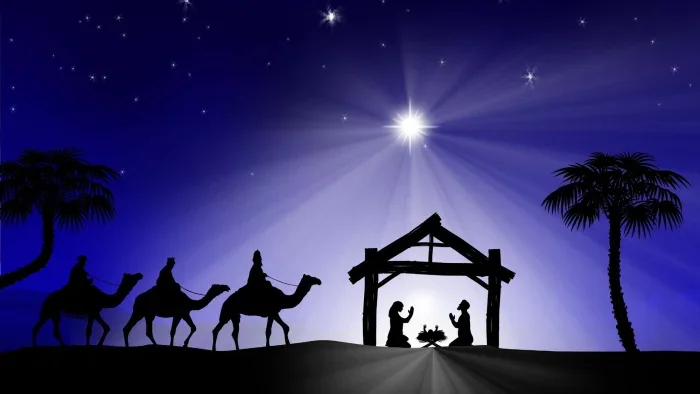
Imagine a nativity scene with baby Jesus, Mary and Joseph, the shepherds, the wisemen, and the typical cow, oxen, sheep, camel, and dragon? That is the image we are introduced to in the book of Revelation. Tune in as Pastor Josh teaches us about the cosmic intrusion that was the incarnation of the Holy God:

“…the point is that all the greatest powers are mustered against the infant Christ. Behind the greatest military and political might of Rome lies the greatest cosmic powers of evil, waiting to kill and devour. And instead of threatening the plan of God in any way, all these powers, and all of their malice, serve only God’s purpose…”

Mary's Magnificat (Luke 1:46-55)

Mary's Magnificat (Luke 1:46-55)

“Having looked at Hannah’s Song in 1 Samuel recently, I was excited to have an opportunity to preach again on Mary’s song here, in the Magnificat, as it plays an important role in  introducing all the themes of salvation…That Mary’s song echoes those songs of old is significant for the way it so clearly extends the activity of God celebrated by Mary, far back into the past, making clear Luke’s belief that what he is now narrating is continuous with that story.”

Israel Demands a King (1 Samuel 8)

Israel Demands a King (1 Samuel 8)

“God, for his part, graciously condescends to the people’s desire. But tells Samuel to warn them of what a human king will do. ‘The way of kings’ is characterized by the key words take and best. ‘The way of kings’, by nature, is parasitic rather than giving. And kings are never satisfied with the worst. Various aspects of ‘the way of kings’ would soon be implemented by Saul, Israel’s first king. But it would be David's son Solomon who would literally put tens of thousands of his own people to forced labor. ‘The way of kings’, to take the best is contrasted with the heavenly King, who takes nothing from his people…”

Mark 15:40-16:8

Mark 15:40-16:8

“The rush and violence of crucifixion, the blazing reality of their master’s death, the shock of it all was too much to bear and no one remembered, let alone trusted, his words of hope. Mark chapters 8, 9, and 10 tell us that on at least three separate occasions Jesus foretold not only his death but also his resurrection. And everything, everything else he ever spoke to them had come through… so why not believe this?

Church, they couldn’t, no amount of logic or arguing, pleading or exuberance can force anyone to believe in the risen Lord. Understanding and belief of this, is purely and only a gift of God, lest humans boast that they figured it out on their own. Found salvation on their own. No, Faith is a gift, and it would be given to them soon.”

Israel Needs a Prophet (1 Samuel 3)

Israel Needs a Prophet (1 Samuel 3)

“The Sunday School version of this, which always has to have a moral of the story and an application, will tell us that we should be like Samuel: Listen for God’s voice and answer. Speak, Lord, I’m listening. But that is not at all the message of this passage. We are meant to see God’s faithfulness to his covenant people despite the rampant sin and rebellion taking place at that spiritually benighted worship center. No priest was ministering before the Lord. They had left a small child to fulfill their duties. One who did not even fulfill the requirements to be a priest on many specific points of OT law, who had been dressed by his mom, and placed there by the will of God and according to Hannah’s oath. A child, of whom it says he ‘did not yet know the Lord(v.7)…We should not see Samuel as doing (or being) anything special here. We should see only that “...God chose what is foolish in the world to shame the wise; God chose what is weak in the world to shame the strong; God chose what is low and despised in the world, even things that are not, to bring to nothing things that are, so that no human being might boast in the presence of God. (1 Corinthians 1:27-28)”

Israel Needs a Priest (1 Samuel 2:12-36)

Israel Needs a Priest (1 Samuel 2:12-36)

“It is impossible to fear man and fear God. But fear of man doesn’t always mean fear that they will hurt or harm us, but it is also fear of losing their regard. John 12:43 speaks of those who denied Christ because ‘they loved the glory that comes from man more than the glory that comes from God.’ In an era of passive parenting, where people seek to become their children’s friend rather than an authority figure, the sin of Eli is prevalent today. And it is not only with our children. When we fear losing relationships with others more than fearing God, we will refuse to obey his clear commandments. Our minds will invent all sorts of excuses and human wisdom that excuse us of strict obedience to the commands of God…God will be first in our lives, or ultimately he will take them from us. ‘We must obey God rather than men.’

Israel Needs God's Promises (1 Samuel 1:1-2:11)

Israel Needs God's Promises (1 Samuel 1:1-2:11)

“Although passive and dim-sighted, Eli blesses Hannah, although probably just to get her to leave. She, however, takes the word of the high priest as a promise from God. Where in her distress she had begun a fast, upon receiving the blessing she eats and her sadness left her.  Such is her trust that the Lord of Hosts can and will accomplish his will, she is at peace even before her situation changes…The object of Hannah’s delight is neither herself—that she has overcome the disgrace of barrenness—nor her son. Instead it is the Lord, who is the source of both her son and her happy circumstance…”